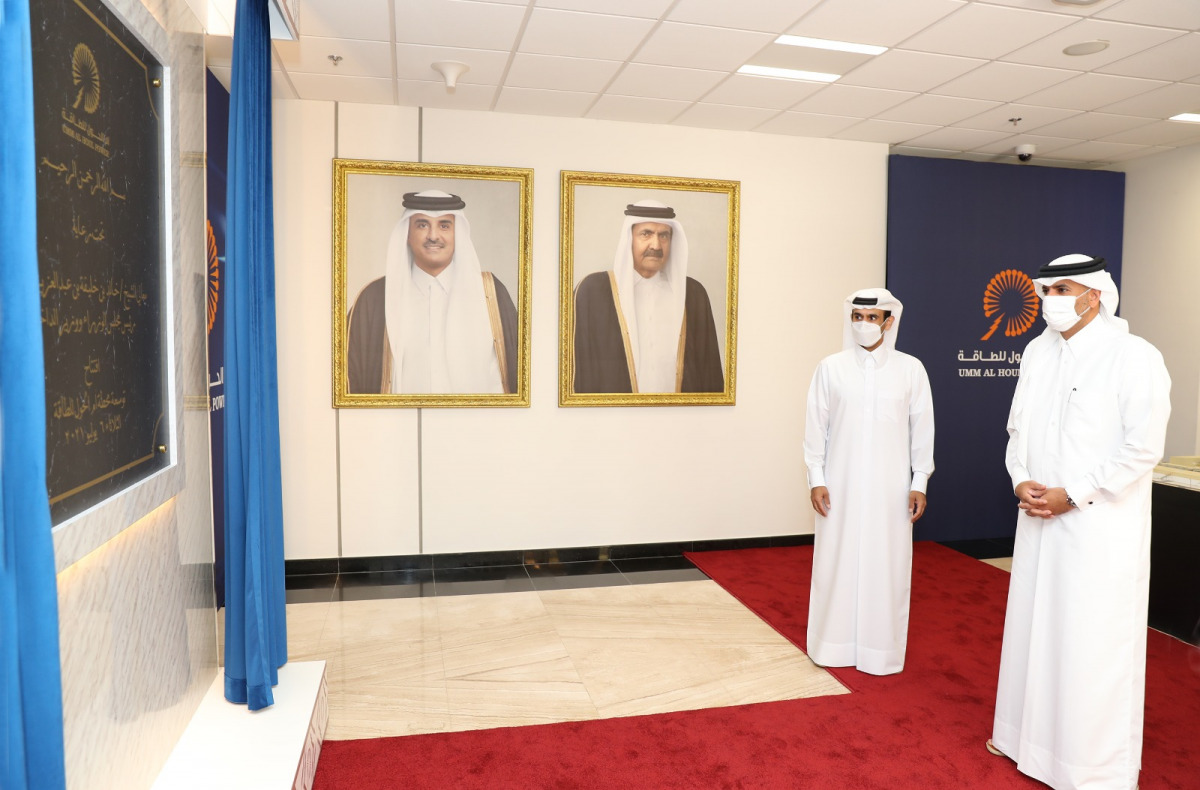
Doha: Umm Al Houl Power Company inaugurated today the water expansion project in a special ceremony held today under the patronage and attendance of the Prime Minister and Minister of Interior H E Sheikh Khalid bin Khalifa bin Abdulaziz Al Thani. The Minister of State for Energy Affairs H E Saad Sherida Al-Kaabi also attended the event.
The completion of the project constitutes a quantum leap towards achieving self-sufficiency in the production of electricity and water.
Umm Al Houl Power Station will meet 30% of the country's electric energy needs, and 40% of its desalinated water needs, producing 2,520 megawatts of electricity and 197.9 million gallons per day of desalinated water.
This expansion will increase the production capacity of desalinated water by 61.4 million gallons per day, which raises the water production capacity in Umm Al Houl Power Station to 197.9 million gallons per day.
Minister Al-Kaabi said: “We are very proud of this leading strategic project, which was accomplished during difficult and challenging circumstances, characterized by a pandemic that hampered various aspects of life and business around the world. However, we have managed to overcome all obstacles with the support of our wise leadership and the efforts of our partners, and to accomplish this project in record time and ahead of schedule.”
The project has been successfully completed despite the challenges imposed by the ongoing COVID-19 pandemic, and within the budgeted cost of about QR 1.64 billion, thanks to the dedicated efforts of the national experts and all members of the project’s team.
The expansion project is aligned with the Qatar National Vision 2030 to preserve the environment, and the efforts of the energy sector in this regard to reduce carbon emissions. The project’s use of seawater from the current power plant’s cooling system as a provider for the expansion project is one of the unique design concepts for this project, which has eliminated the need to build a new seawater extracting facility, which helped reduce capital costs, reduce energy consumption, and increase maximum efficiency, thus reducing the cost of treated water by more than 25%.