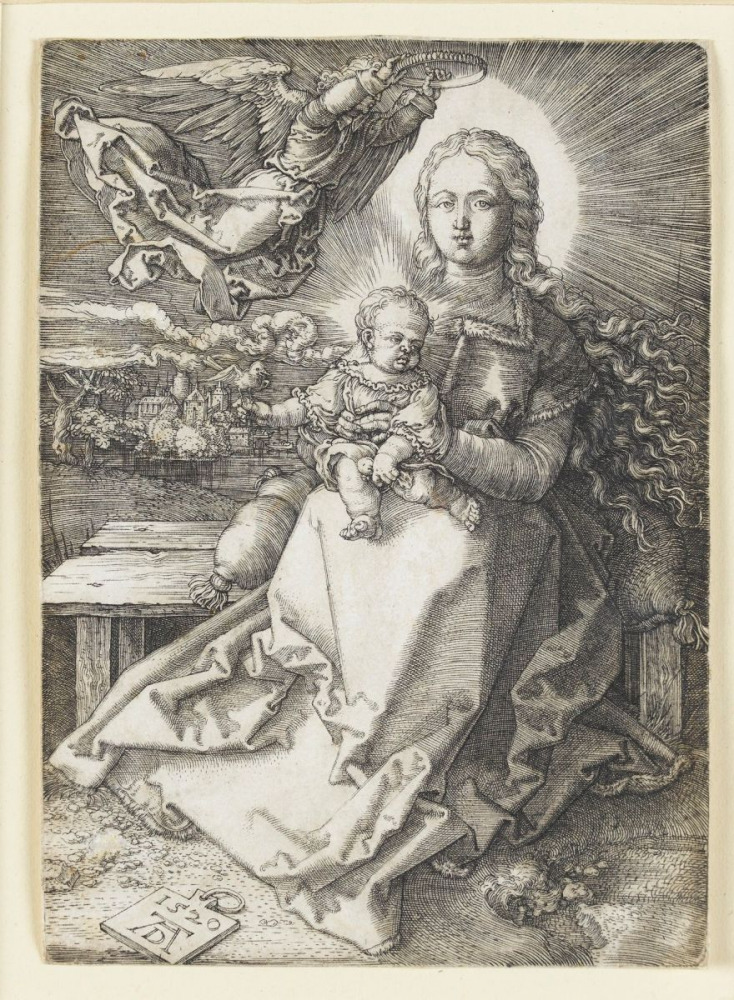
Berlin: Long-dead German artist Albrecht Duerer is causing a stir after a collector donated a lost work, bought for a few euros on a French flea market, to a Stuttgart museum.
The bronze engraving titled "Mary crowned by an angel" dates back to the year 1520, Anette Frankenberger of the Staatsgalerie art museum told AFP on Friday, and is in "very good condition".
A retired French archaeologist noticed the work on a bric-a-brac stand in Sarrebourg in eastern France, after the seller cleared it out of a house in the town.
Alerted by his keen eye, he quickly bought the piece -- only to find the stamp of the Staatsgalerie on its back and decide to donate it anonymously.
The man came "personally with his wife" to return the engraving, which had been missing since the end of World War II, Frankenberger said.
The museum spokeswoman added that the piece had likely been wrapped in paper for some of the intervening decades, keeping it in good condition.
It was owned by a former deputy mayor of Sarrebourg before ending up at the second-hand stall, she said.
The museum has not yet decided how to put the engraving on display.
"We have to find the right setting to present it in," Frankenberger said.
Duerer was born in 1471 in the southern German city of Nuremberg and travelled through Italy, becoming one of the first artists to introduce the Renaissance in Germany and northern Europe.
AFP