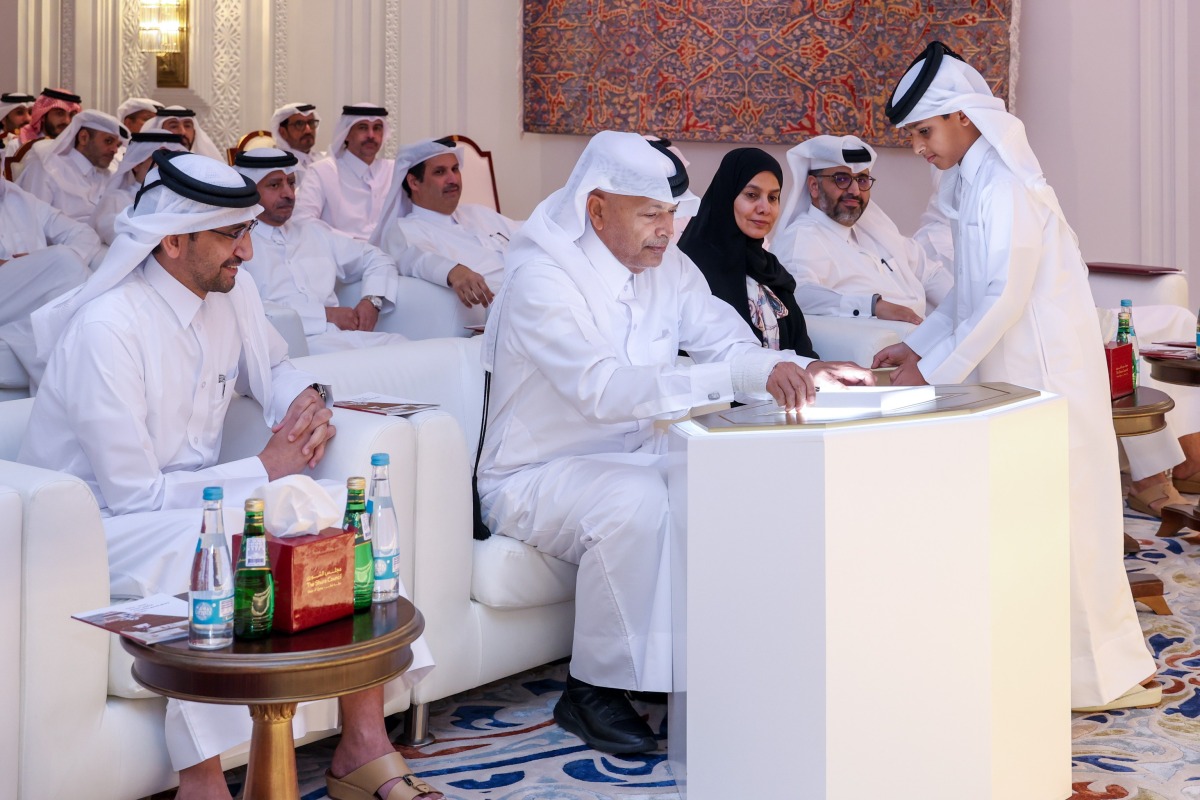
Shura Council Speaker H E Hassan bin Abdullah Al Ghanim, Minister of Justice and Minister of State for Cabinet Affairs H E Ibrahim bin Ali Al Mohannadi, and other dignitaries at the strategy's launch yesterday.
Doha, Qatar: The General Secretariat of the Shura Council yesterday launched its institutional strategy for 2025-2030, in the presence of Speaker of the Shura Council H E Hassan bin Abdullah Al Ghanim; Minister of Justice and Minister of State for Cabinet Affairs H E Ibrahim bin Ali Al Mohannadi; and President of the Civil Service and Government Development Bureau and Secretary‑General of the National Planning Council H E Dr. Abdulaziz bin Nasser Al Khalifa, along with several Their Excellencies members of the Council.
The strategy is designed to strengthen the Council’s legislative and oversight functions, raise the efficiency of administrative and operational work, and promote digital transformation and institutional innovation in line with international best practices. It is anchored in a vision of consolidating the Council’s institutional presence, guided by values of efficiency, responsibility, teamwork, excellence, and sustainability.
In remarks at the ceremony, Secretary‑General of the Shura Council, H E Nayef bin Mohammed Al Mahmoud, said the strategy was the product of institutional work and a comprehensive development program based on a clear vision for advancing the Council’s mission. He noted that its foundations were inspired by the directives of Amir H H Sheikh Tamim bin Hamad Al-Thani, and that its preparation involved a review of documents and legislation governing the Council’s work to ensure alignment with Qatar National Vision 2030 and the Third National Development Strategy.
Al Mahmoud explained that the plan sets out six main objectives: strengthening governance in institutional administration, improving operational efficiency through digital transformation and innovation, supporting legislative and oversight work, developing partnerships and cooperation at local and international levels, building future‑ready human capital, and enhancing community engagement.
He added that the strategy includes 46 projects to be implemented over the next five years, describing it as a new phase in institutional development that provides a practical framework to support the Council’s work and reinforce its role in public life.
Concluding his speech, Al Mahmoud expressed appreciation to the Speaker, members of the Council, and all contributors to the strategy, voicing hope that its implementation will strengthen parliamentary work and the Council’s national role in the coming period, noting that this step builds on an institutional journey dating back to the Council’s establishment in 1972.