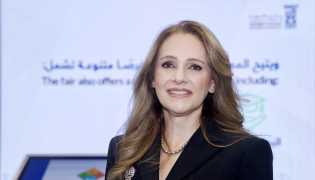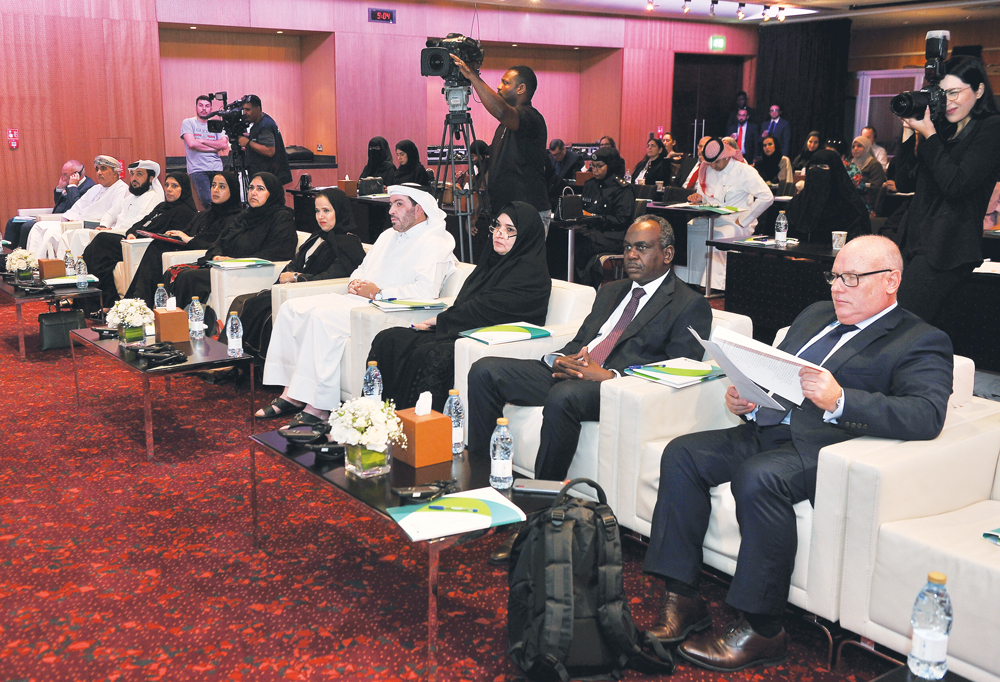
The symposium by DIFI focused on children’s well-being in Qatar. Pics: Baher Amin / The Peninsula
The Doha International Family Institute (DIFI), a member of Qatar Foundation (QF), yesterday hosted a symposium titled ‘Child Wellbeing in Qatar’ at Qatar National Convention Centre, which saw participants create a list of comprehensive family policy recommendations for the region.
The event – held in partnership with the Ministry of Administrative Development, Labour and Social Affairs in Qatar and UNICEF in the Gulf Area Office – was attended by researchers, practitioners, policy makers and service providers from across Qatar.
Dr Sharifa Noaman Al Emadi, Executive Director of DIFI, delivered the opening remarks. “To understand the wellbeing of children, we must approach child development from an integrated perspective that encompasses many aspects that affect children, such as family, colleagues, community, programs, and policies.
“The child’s wellbeing must be measured in a variety of dimensions, including physical, behavioural, psychological, and cognitive wellbeing, as well as protection and economic security,” Dr Al Emadi said.
“This country has placed a strong emphasis on the importance of investing in the wellbeing of children, and children to advance national priorities and international development. Qatar National Vision 2030 requires us to use our resources wisely to ensure the wellbeing of future generations.”
Ghanim Mubarak Al Kuwari, Head of Social Security Department at the Ministry of Administrative Development, Labour and Social Affairs, said, “The State of Qatar is an active and responsible member of the international community. The participation in this symposium affirms its commitment, effectiveness, responsibility, and keenness to develop and update its laws and legislations related to the issues of the rights of children and the family in general, and to upgrade them to conform to the relevant international standards.”
“In line with the Ministry of Administrative Development, Labour and Social Affairs’ mandate, and its responsibility as the leader of the social protection sector, the ministry strives to exert all its efforts – whether through legislation or practice – to preserve the rights and development of the child, develop programs, and provide necessary awareness of the concept of social protection and dissemination throughout Qatar.”
The symposium began with a discussion on DIFI’s ‘Child Wellbeing in the Gulf’ report. The study systematically reviewed programs and policies, and focused on seven main factors: physical health, behavioural adjustment, psychological well-being, social relationships, safety, cognitive wellbeing, and economic security. The report also focuses on the international agenda and national strategies, as well as country-specific programs and policies.
The first session was led by Dr Asmaa Al Fadala, Director of Research, World Innovation Summit for Education, an initiative of QF and focused on child wellbeing in education. The second session on child health and wellbeing brought together experts including Dr Sadriya Al Kohji, NHS Lead for Healthy Children and Adolescents, Ministry of Public Health, Assistant Director of Medicine for Child and Adolescent Health, PHCC.
The last session was led by Dr Khalid Al Ansari, Chair of Emergency Medicine and Founder of Sidra Medicine’s Child Advocacy Program, and addressed child wellbeing and protection.