LOC CEO highlights the impact of hosting mega-sporting events at Sports Diplomacy Summit in Washington D.C.
Published: 03 Jun 2026 - 10:01 pm | Last Updated: 03 Jun 2026 - 10:05 pm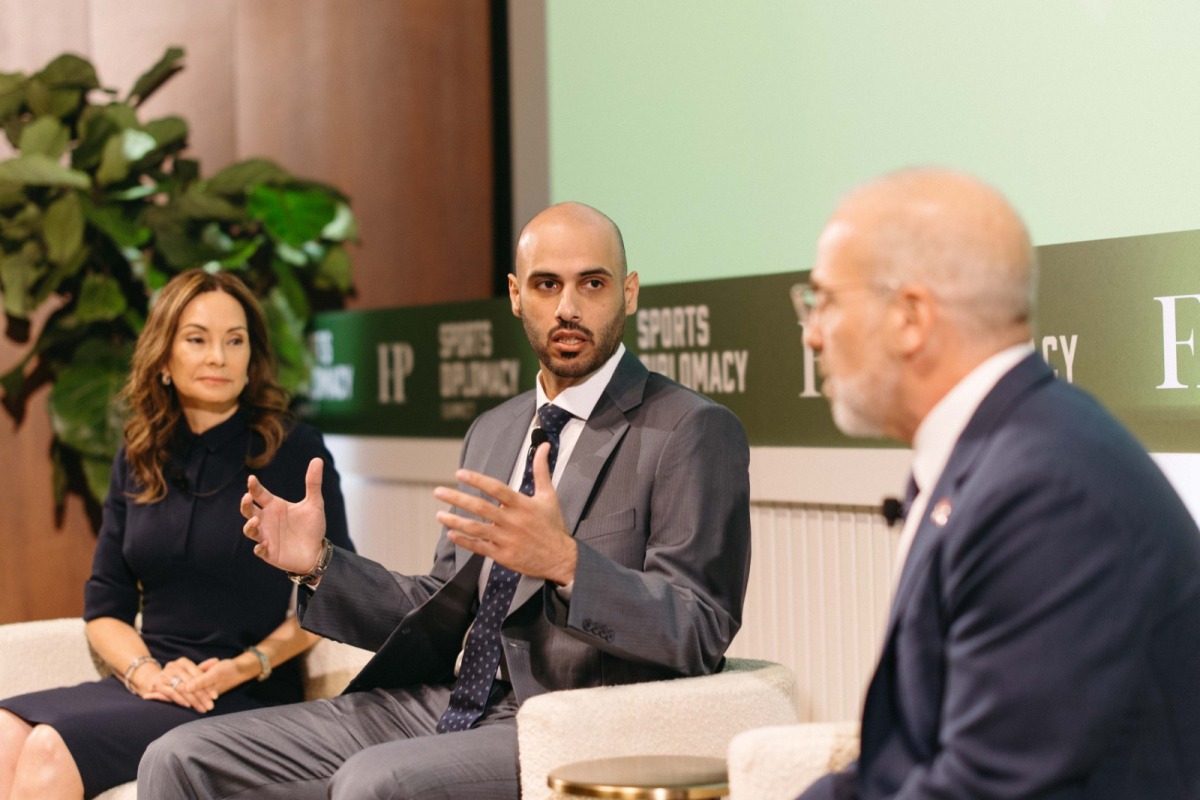
Doha, Qatar: Jassim Al Jassim, CEO of the Local Organising Committee for Football Events (LOC) in Qatar, participated in the Foreign Policy Sports Diplomacy Summit held at the Embassy of the State of Qatar in Washington D.C. to mark the 250th anniversary of the United States and the countdown to the FIFA World Cup 2026.
The summit brought together leaders from government, diplomacy, media, and investment to explore sport's growing role as a tool for international cooperation and economic development.
“Qatar’s hosting journey did not end with the FIFA World Cup 2022,” said His Excellency Sheikh Meshal bin Hamad Al Thani, Ambassador of the State of Qatar to the United States.
“The expertise and partnerships built through that tournament continue to support the global sporting community, including preparations for the FIFA World Cup 2026 across North America. We are proud that Qatar’s hosting legacy is contributing to the next chapter of World Cup history, and that hosting the Foreign Policy Sports Diplomacy Summit reflects our commitment to advancing international dialogue through sport.”
Speaking on a panel titled Welcoming the World: Leadership Lessons From Mega Event Hosts, Al Jassim reflected on the lasting legacy of the FIFA World Cup Qatar 2022™, which showcased Arab culture, hospitality, and operational excellence on a global stage, firmly establishing Qatar on the world map of sport.
“For Qatar, hosting FIFA World Cup 2022 was never the finish line. It was the foundation for building long-term national capabilities. We weren't building for one event; we were building an ecosystem and a generation of expertise,” said Al Jassim.
“Today we continue to benefit from the infrastructure, expertise, partnerships and international relationships that were strengthened through the tournament. Equally important is human legacy. Thousands of people developed new skills and capabilities that continue to contribute to Qatar and to international sport.”
Al Jassim also addressed the cultural impact of hosting international sporting events, describing how Qatar's sporting legacy has united fans from across the globe and invited them to immerse themselves in local culture, helping to break down stereotypes and misconceptions about the region.
“Sport is one of the few truly universal languages. It allows countries to tell their story in a way that transcends politics, geography and culture. The lesson for any major national celebration is that people connect with authenticity. The most powerful stories are not manufactured; they come from a country's people, values and lived experiences. The World Cup gave us a platform to showcase who we are as a nation, but also who we aspire to be. The event became a bridge between cultures and a vehicle for mutual understanding.”
Since hosting the Middle East's first FIFA World Cup, Qatar has built an illustrious sporting legacy featuring a number of record-breaking events, including the AFC Asian Cup Qatar 2023™ and three consecutive FIFA tournaments in 2025: the first 48-team FIFA U-17 World Cup, the FIFA Arab Cup, and the FIFA Intercontinental Cup.
“Hosting at this scale is ultimately about people. Infrastructure is important, but infrastructure alone does not deliver a World Cup or a continental championship. What delivers those events are thousands of highly trained people working together across security, transport, operations, technology, media, hospitality, healthcare and dozens of other functions,” said Al Jassim.
As the world turns its attention to the next FIFA World Cup in North America, Al Jassim underscored Qatar's commitment to building on its sporting legacy through knowledge sharing and international cooperation.
A dedicated team of experts from Qatar – who played key roles in delivering landmark tournaments in the country – has been deployed across several Host Cities in the United States and Canada to support delivery of the FIFA World Cup 2026, under a knowledge and expertise transfer Memorandum of Understanding (MoU) between the Supreme Committee for Delivery & Legacy (SC) and FIFA. A second contingent of SC staff and stakeholders is participating in an observation programme to deepen understanding of cross-border mega-events.
“Every tournament leaves its own unique mark on football and on the world. Qatar 2022 was a historic moment for the Middle East and Arab world. FIFA World Cup 2026™ will be historic for different reasons,” Al Jassim concluded.
Qatar will welcome the world once again when it hosts the second of five consecutive editions of the FIFA U-17 World Cup from 19 November to 13 December.