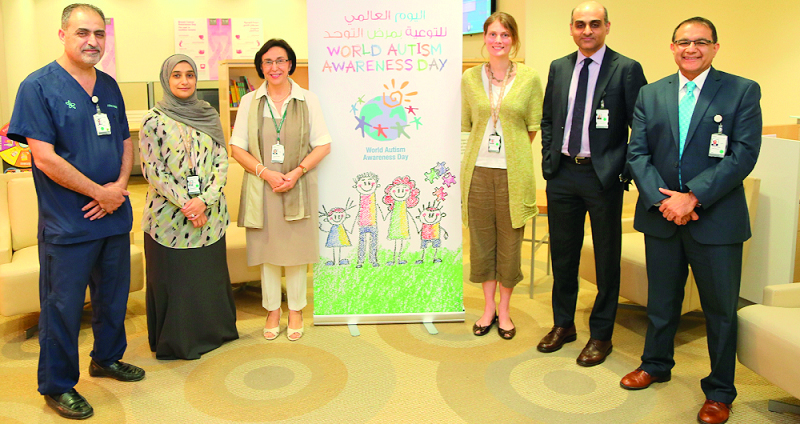
Sidra Medicine officials during the World Autism Day event, yesterday.
Doha: To mark World Autism Day yesterday and World Autism Month throughout April, Sidra Medicine experts shared a series of recommendations for parents to consider in engaging children with Autism Spectrum Disorder (ASD).
Autism is a complex neurodevelopmental disorder, predominantly genetic in nature. Children with ASD manifest a range of symptoms associated with difficulties in language and communication and social interaction.
Sidra Medicine’s approach to caring for children with ASD reflects its wider vision of providing family-centered and evidence-based patient care delivered by an exceptional cadre of faculty. The healthcare organization’s clinicians shared some insights to support caregivers, teachers and professionals who work with individuals with ASD.
Individuals with ASD face a number of challenges due to difficulties associated with social communication and interaction. Many also have sensory complications and restricted interests that may limit their social engagement, as well as the learning and development of new skills. However, it is important to keep in mind that individuals with ASD have strengths and abilities that need to be nurtured.
A key suggestion that Sidra Medicine’s experts made includes acknowledging and cultivating these interests, strengths, and talents. Such an approach creates rich opportunities for social, academic and vocational growth and development.
Dr Nahed Alateeqi, Senior Attending Physician at the Department of Developmental Pediatrics at Sidra Medicine, said: “It is important to try to balance nurturing the talents of children with ASD in everyday routines and activities and not think of them as interfering with the child’s progress in other areas.
“For example, allow your child to draw as a solitary activity if that’s what interests them. Think of it as time to relax and regulate emotionally and don’t view it as a way of hiding away from social interactions and engagements.”
Utilising a child’s interests is also an excellent way to motivate and develop new skills. It is an opportunity to introduce children with ASD to others who have similar interests to share their experiences and passions.
Sidra Medicine experts suggest that one way to do this it to encourage children to participate in after school activities or clubs such as science clubs, music and theater activities, as well as art programs.
Dr Alateeqi also suggested that it’s important to incorporate interests into learning by motivating the child to stay focused on school work. “For example, you can make use of a child’s interest in cars by reading a book about the topic. You can also do math problems by counting vehicles or measuring the length of different models,” she said.
At Sidra Medicine, the Developmental Paediatrics and Child and Adolescent Psychiatry clinics currently provide multiple services for children and young people with ASD. This includes comprehensive diagnostic assessments and treatment recommendations. The clinics also provide evaluation services for children with comorbid emotional and psychiatric issues.