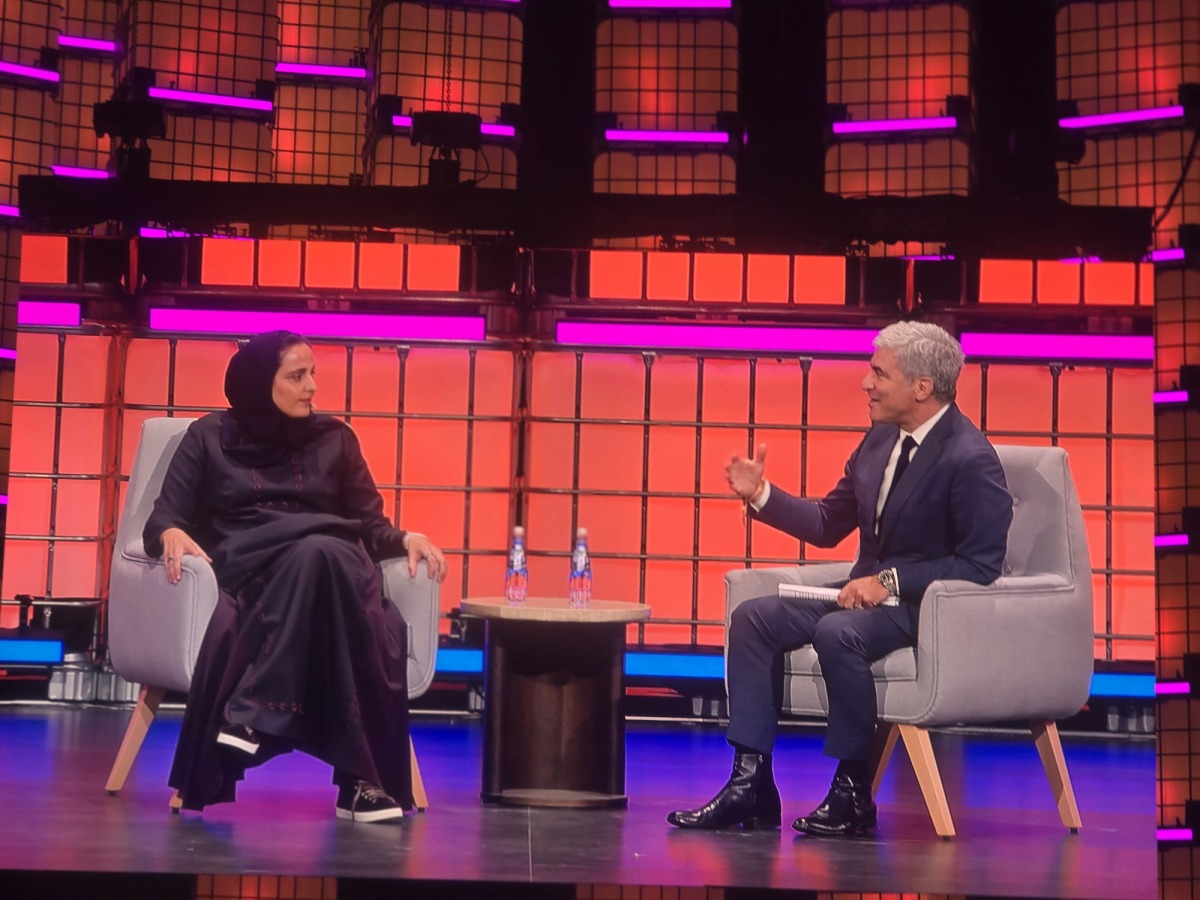
Chairperson of Qatar Museums H E Sheikha Al Mayassa bint Hamad bin Khalifa Al-Thani and CEO and Wallis Annenberg Director of the Los Angeles County Museum of Art, Michael Govan during the session at Web Summit yesterday.
Doha, Qatar: In a captivating session at Web Summit Qatar 2026, Chairperson of Qatar Museums H E Sheikha Al Mayassa bint Hamad bin Khalifa Al-Thani outlined Qatar’s ambitious strategy to fuse culture with technology and creative industries, positioning the nation as a global hub for innovation and artistic expression.
Anchored by CEO and Wallis Annenberg Director of the Los Angeles County Museum of Art (LACMA) Michael Govan, the discussion titled “Investing in Culture: Museums, Creative Industries and the Knowledge Economy” highlighted Qatar’s investments in museums, technology and AI-driven projects to foster a knowledge-based economy.
Sheikha Al Mayassa stressed that museums in Qatar are conceived not as static repositories of the past, but as living public spaces that generate creativity, dialogue and social value. She explained that each museum project is designed to enhance its surrounding urban ecosystem, bringing together diverse communities and encouraging the exchange of ideas in a safe and inclusive environment.
She described museums as “urban enhancers” that convene diverse communities for respectful dialogue.
“Museums are the most relevant public spaces we have,” she asserted, countering Western-centric views by tracing museum origins to Mesopotamia and Alexandria. “Qatar’s projects, including the National Museum and Museum of Islamic Art, aim to rebalance East-West cultural exchanges," she added.
Sheikha Al Mayassa introduced Qatar’s newly launched Creative Visa programme, designed to attract global talent. “We invite creatives who share our vision,” she explained, noting its selective nature and flexibility—no full-year residency required.
She cited Art Basel Qatar Artistic Director Wael Shawky’s relocation with his family as an example, and revealed growing interest from fashion designers at the annual Fashion Trust Arabia event. “They all want to live here because they see the opportunity is vast,” she said, emphasising Qatar’s welcoming atmosphere shaped by diplomatic efforts under the leadership of Amir H H Sheikh Tamim bin Hamad Al-Thani. A key theme of the session was the intersection of technology and humanity. Sheikha Al Mayassa highlighted Qatar’s tech infrastructure, from the Qatar Science and Technology Park to the new Qatar Artificial Investment Fund, inviting startups to innovate locally rather than in Silicon Valley.
“We can do the same for technology as we balance the cultural dialogue,” she said. Collaborations like AI artist Refik Anadol’s work on the Mathaf collection exemplify this, using data to educate and inspire youth amid short attention spans.
Govan echoed the people-centric focus: “Technology is creating tools for creativity.” Both stressed protecting children from tech addiction while harnessing it for empathy and meaningful relationships. Sheikha Al Mayassa concluded by inviting attendees to Art Basel Qatar, promising cross-pollination between tech and art worlds.