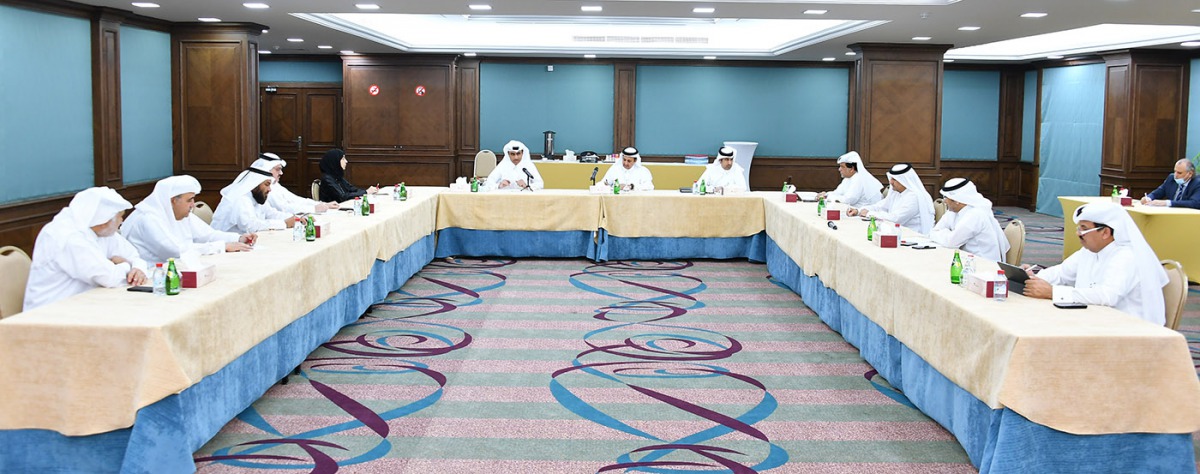
Doha: Qatar Chamber and Ministry of Administrative Development, Labor and Social Affairs (MADLSA) held a meeting today to discuss the recently issued laws regarding determining the minimum wage for workers and facilitating changing jobs as well as challenges facing the private sector and related to the Ministry's competences.
Presiding over the meeting, Qatar Chamber Chairman HE Sheikh Khalifa bin Jassim Al Thani underscored the importance of boosting cooperation and coordination between QC and MADLSA to address the obstacles and challenges faced by the private sector companies related to the Ministry's competencies.
Assistant Undersecretary for Labor Affairs at the MADLSA Mohamed Hassan Al Obaidly said the Ministry was keen on supporting business owners and the private sector as well as protecting the interests of laborers.
Al Obaidly outlined details of the new amendments which included determining the minimum wage for workers, amendments to the labor law and amendments to the law regulating the entry and exit of expatriates and their residence, pointing out that these reforms aimed to improve conditions of labor market in the State of Qatar.

With regard to amendments aiming to facilitate changing workplace, he said that there are three “controls” for changing jobs which ensure the interests of the employee and the employer, namely notification, non-competition and compensation.
Qatar has been highly praised by many countries and international organizations after issuing these laws and amendments, he noted.
He pointed to the cooperation between the Chamber and the Ministry, adding that it was agreed to form a joint committee between the Chamber and the Ministry to discuss recruitment requests and other issues such as the ban and any other obstacles facing the private sector, noting that this committee will be responsible for addressing all issues and obstacles facing the private sector and related to the Ministry's competences.
Al Obaidly revealed the Ministry's decision regarding the ban on violating companies, saying that the ban will be only on the violating commercial register, especially with regard to delaying the payment of salaries.