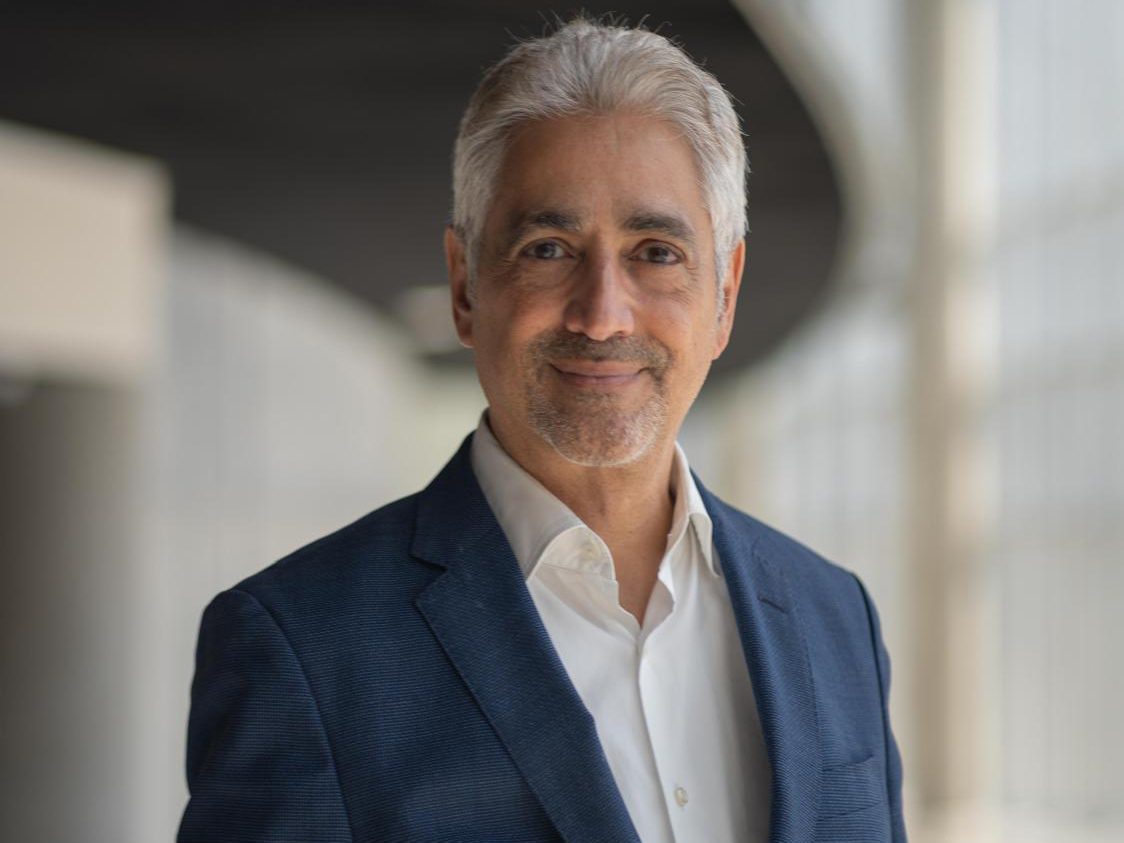
Managing Director of Qatar Foundation’s Doha Debates, Amjad Atallah
Doha, Qatar: Open and inclusive discussions on the safety and legitimacy of artificial intelligence are essential to preparing young people for a rapidly changing future, according to Managing Director of Qatar Foundation’s Doha Debates, Amjad Atallah.
Atallah said that one of the biggest challenges surrounding AI is that many people are not yet aware of the questions they should be asking. “A lot of times we don’t even recognise the questions that we need to ask because we don’t know what the issues are, we don’t know what’s at stake,” he told The Peninsula.
“That’s why it’s very important to have debates that really flesh these issues out and bring people together.” He noted that Doha Debates is distinctive in the way it bridges generations and experiences by placing students at the start of their academic and professional journeys in conversation with leading global experts.
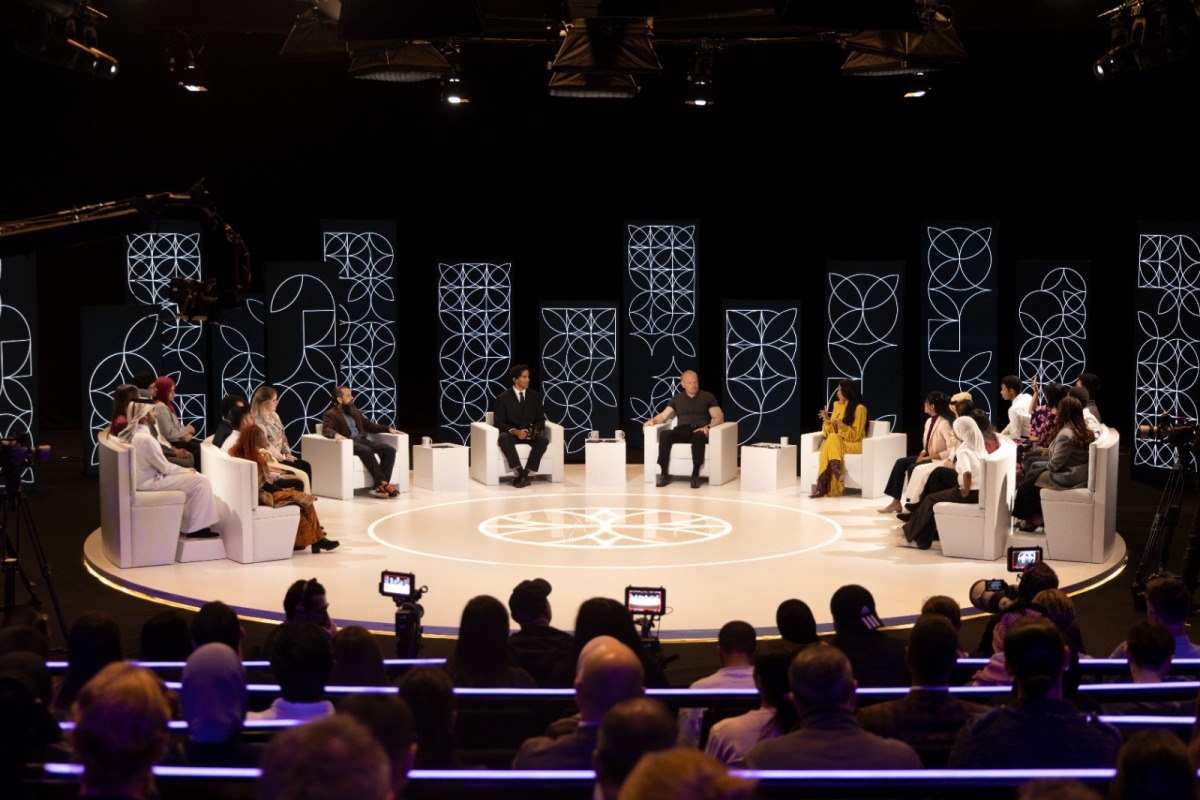
“We bring together students who are just beginning their careers with experts who are at the top of their field,” Atallah explained. “That intersection of conversation allows both sides to learn from each other.” According to him, these exchanges help experts better understand the concerns of young people, while giving students exposure to complex ideas they may not have encountered before. “It allows the expert to realise what is on the mind of a 20-year-old student and what they’re worried about, and vice versa,” he said, adding that students often come away with a deeper understanding of issues they previously knew little about.
Atallah said the focus on artificial intelligence, particularly the concept of superintelligence, aligns closely with the core mission of Doha Debates. “Doha Debates is built around truth-seeking on existential issues,” he said. “All of our topics are meaning-of-life questions that affect people everywhere, whether you’re living in Doha, Hong Kong or New York.”
He stressed that AI stands out as one of the most consequential subjects the platform engages with. “There are very few topics where one of the potential problems is that humanity could be destroyed,” Atallah said. “This is one we have to keep coming back to until, collectively, we come up with an answer.”
His remarks come as Doha Debates recently hosted a town hall on “Is Humanity Ready for the Intelligence Explosion?” exploring the idea of an “intelligence explosion,” a future in which intelligence becomes increasingly powerful, scalable and potentially beyond human control.
The town hall style debate brought together students, academics and international experts at Multaqa, the Education City Student Center, to examine whether current ethical norms, political systems and governance structures are equipped to keep pace with accelerating technological change.
Moderated by Nadir Nahdi, the town hall featured Max More, strategic philosopher and transhumanist thinker; Dr. Roman Yampolskiy, professor of computer science and a leading voice on AI safety and control; and Nabiha Syed, executive director of the Mozilla Foundation and advocate for equitable, human-centred technology governance.
The speakers approached the issue from sharply different angles, debating whether advanced AI represents a transformative opportunity for humanity or a profound risk to human agency.