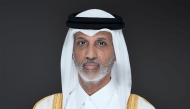
Dr. Ahmed Essa Al-Sulaiti
The modern international intellectual property (IP) system is deeply rooted in efforts to harmonize protection across borders, leading to the establishment of the World Intellectual Property Organisation (WIPO) in 1967. As a specialized agency of the United Nations, WIPO has since evolved into the central forum for the development of international IP norms, administering key treaties and facilitating cooperation among member states in an increasingly knowledge driven global economy.
Qatar joined WIPO in 1976, marking an early recognition of the importance of IP rights in its national development trajectory. This commitment was further reflected in the gradual development of its domestic legal framework, beginning with its first modern IP legislation in the mid-1990s. Over time, Qatar has prioritized the protection and enforcement of IP rights, viewing them not merely as legal safeguards but as strategic tools for economic diversification, foreign direct investment (FDI), and innovation. This approach aligns closely with the country’s long-term development agenda, particularly under Qatar National Vision 2030, which emphasizes the transition toward a knowledge based economy.
The growing prominence of IP in the global economy has fundamentally reshaped how states pursue development, innovation, and competitiveness. In light of this, Qatar’s recent participation in the Assemblies of Member States of WIPO offers a timely opportunity to examine both its historical contributions to the international IP system and its evolving role in shaping future legal and policy frameworks, particularly in light of emerging technologies such as artificial intelligence (AI). Crucially, this role must be understood at the intersection of WIPO and the World Trade Organisation (WTO), where IP operates both a legal regime and central pillar of trade governance.
Intellectual Property as a Development Catalyst
Over the past few decades, IP has become a cornerstone of economic policy, as intangible assets such as patents, trademarks, copyrights, and data now drive global value creation. This transition is especially significant for resource-rich countries like Qatar, which are actively reducing dependence on hydrocarbons.
Qatar’s engagement with WIPO reflects its long-term recognition of IP’s critical role and strategic importance. This focus is evident in the commitment to advancing a sustainable, knowledge-based economy. In this respect, IP policy in Qatar is not confined to domestic innovation strategy but increasingly aligned with trade-related obligations and opportunities under the WTO framework, particularly the TRIPS Agreement.
Beyond this, the long-term effectiveness of IP systems largely depends on public awareness and educational integration at all levels of the academic curricula. Such efforts promote respect for IP as a legal and economic asset, and encourage creativity and entrepreneurial thinking among students. Over time, embedding IP education within national learning frameworks can reinforce the broader objectives of long-term economic development.
Qatar’s Historical Contributions and Legislative Development
Qatar’s trajectory within WIPO has been marked by steady institutional and legislative development. A key milestone has been the country’s commitment to international IP treaties, which has strengthened its legal infrastructure and alignment with global standards. Notably, Qatar’s accession to the Madrid Protocol in 2024 represents a significant advancement in trademark protection, enabling streamlined international registration and enhancing the country’s attractiveness to FDI. This accession also reflects Doha’s broader effort to harmonize its IP system with recognized registration mechanisms that complement its commitments under WTO disciplines.
Nationally, Qatar has undertaken comprehensive reforms to modernize its IP framework. These include specialized legislation linked to major international events (most prominently the FIFA World Cup Qatar 2022), where targeted laws were enacted to protect trademarks, copyrights, and related rights. Such measures demonstrate how IP policy can be applied within specific sectors to support targeted economic and regulatory objectives.
In parallel, the establishment of specialized judicial bodies, such as investment and commercial courts with jurisdiction over IP disputes has reflected the continued development of Qatar’s legal ecosystem. This strengthens investor confidence and indicates the country’s commitment to effective IP enforcement.
WIPO Assemblies and Multilateral Engagement
Participation in WIPO Assemblies provides member states a platform to shape the evolution of international IP norms. Qatar’s active role in these forums reflects a broader shift among developing nations, from passive recipients of global rules to active participants in their formation.
Historically, WIPO has demonstrated adaptability in response to member state priorities, as in the Marrakesh Treaty and, more recently, the Treaty on Intellectual Property, Genetic Resources and Associated Traditional Knowledge. Qatar’s participation in these discussions situates it within a broader coalition of states advocating for a more inclusive and development-sensitive IP system.
In early 2024, WIPO’s Diplomatic Conference adopted the Treaty on Intellectual Property, Genetic Resources and Associated Traditional Knowledge after a twenty-five-year negotiation. Later that year, WIPO held its first ever Diplomatic Conference in the Gulf, in Riyadh, adopting the Design Law Treaty; Qatar participated in the Drafting Committee.
The AI Challenge
Looking ahead, one of the most pressing challenges for the international IP system is the rise of emerging technologies like AI which is redefining the boundaries of creativity, authorship, and invention. This is significant because IP laws are built on these concepts.
For policymakers, including those in Qatar, several critical questions arise, such as ownership of AI-generated works, addressing AI-assisted inventions within patent systems, and balancing incentives for innovation and public access.
These issues are currently under discussion within WIPO and other international forums. Qatar’s participation in these debates positions it as a regional hub for technological advancement. As a result, WIPO’s 2024 publication Generative AI: Navigating Intellectual Property and the ongoing WIPO Conversation on Intellectual Property and Frontier Technologies offer a useful starting point.
At the same time, AI presents opportunities. For example, AI-driven tools can enhance patent searches, streamline administrative processes, and improve enforcement mechanisms. By leveraging such technologies, Qatar can modernize its IP infrastructure and increase efficiency across the product’s lifecycle.
Regional and Global Implications
Doha’s approach to IP is emblematic of a broader transformation within the Middle East and North Africa (MENA) region. Countries are increasingly recognizing that strong IP systems drive economic development.
Regional cooperation, through unions such as the Gulf Cooperation Council (GCC), offer additional opportunities to harmonize IP policies, expand markets, and attract FDI. Lessons can also be drawn from other regional models, such as the EU’s integrated IP system. In this context, the GCC Trademark Law of 2013 continues to operate as a harmonized model applied through national legislation across member states.
At the global level, however, the future trajectory of IP is likely to be shaped by three interconnected dynamics: first, technological change, including AI, biotechnology, and digital platforms; second, development priorities, particularly ensuring that IP systems support inclusive growth; and third, geopolitical shifts, as emerging economies assume a more prominent role in norm-setting.
Qatar’s engagement with WIPO places it at the intersection of these dynamics, enabling it to contribute and benefit from the evolving landscape.
From legislative reforms and treaty accession to sector-specific innovation strategies, Doha has demonstrated a clear commitment to leveraging IP as a catalyst for development.
At the same time, the challenges ahead, especially those posed by AI, require adaptive, flexible, and innovative approaches. By actively engaging in multilateral discussions and aligning domestic policies with trends, Qatar is well-positioned to shape the future of IP governance. Its position at the interface between the WIPO and the WTO will be central to this role, as global IP norms become increasingly intertwined with trade governance and technological transformation.
Dr. Ahmed Essa Al-Sulaiti is a lecturer at Hamad Bin Khalifa University’s (HBKU) College of Law.
This piece has been submitted by HBKU’s Communications Directorate on behalf of its author. The thoughts and views expressed are the author’s own and do not necessarily reflect an official University stance.