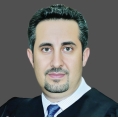
Dr Mohamed Kirat
By Dr Mohamed Kirat
The issue of journalism objectivity was a subject of heated debate for decades. Many concerns and questions have still not been answered properly; and many believe that the issue should not be raised in the first place since there is no objectivity in the practice of journalism, and that there is no possibility of being objective while presenting an event to the audience. Alex Jones argues that objectivity does not require that journalists be blank slates free of bias. In fact, objectivity is necessary precisely because they are biased.
Objectivity means that when covering hard news, reporters don’t convey their own feelings, biases or prejudices in their stories. They accomplish this by writing stories using a language that is neutral and avoids characterising people or institutions in ways good or bad. In other words, the term objective journalism is used to refer to a type of journalism style that is free from biases, personal views or anything else that appears to sway people’s thinking in a certain manner. It is purely based on facts. This is why some people prefer to use fairness instead of objectivity. Fairness means that reporters covering a story must remember there are usually two sides — and often more — to most issues, and that those differing viewpoints should be given roughly equal space in any news story.
The questions to be raised here are: Is there objectivity in journalism? Can a reporter be objective? What about his/her beliefs, convictions, education, religion, background, origins…etc. Is the reporter a human being with feelings, temperaments, likes and dislikes, or a machine that just performs things mechanically? Greenwald asserts that “human beings are not objectivity-driven machines. We all intrinsically perceive and process the world through subjective prisms.” Keller also rejects objectivity as a model. “I avoid the word ‘objective,’ which suggests a mythically perfect state of truth,” he writes. Instead, Keller prefers impartiality as a mode.
When the concept originally evolved, it was not meant to imply that journalists were free of bias. Quite the contrary. The term began to appear as part of journalism after the turn of the 20th century, particularly in the 1920s, out of a growing recognition that journalists were full of bias, often unconsciously. Objectivity called for journalists to develop a consistent method of testing information — a transparent approach to evidence — precisely so that personal and cultural biases would not undermine the accuracy of their work. In the latter part of the 19th century, journalists talked about something called “realism” rather than objectivity. This was the idea that if reporters simply dug out the facts and ordered them together, truth would reveal itself rather naturally. Objectivity called for journalists to develop a consistent method of testing information — a transparent approach to evidence. Realism emerged at a time when journalism was separating from political party affiliations and becoming more accurate. It coincided with the invention of what journalists call the inverted pyramid, in which a journalist lines the facts up from the most important to the least important, thinking it helps audiences understand things naturally.
At the beginning of the 20th century, the rise of propaganda and the role of press agents put responsible and fair journalism at risk. Objectivity was a big issue among professionals as they were concerned about their professionalism and credibility. One of the prominent critics of journalism at the time — the twenties — was Walter Lippmann who simply argued that the media are fabricating the world around us; they are not reporting it. On the coverage of the Russian Revolution by the New York Times, Walter Lippmann and Charles Merz, an associate editor for the New York World wrote “In the large, the news about Russia is a case of seeing not what was, but what men wished to see,” they wrote. Lippmann and others began to look for ways for the individual journalist “to remain clear and free of his irrational, his unexamined, his unacknowledged prejudgments in observing, understanding and presenting the news.”
The solution, Lippmann argued, was for journalists to acquire more of “the scientific spirit … There is but one kind of unity possible in a world as diverse as ours. It is unity of method, rather than aim; the unity of disciplined experiment.” Lippmann meant by this that journalism should aspire to “a common intellectual method and a common area of valid fact.” Lippmann had few illusions. “It does not matter that the news is not susceptible to mathematical statement. In fact, just because news is complex and slippery, good reporting requires the exercise of the highest scientific virtues.”
The complexity of the concept of objectivity itself brought some scholars and experts to talk about fairness, impartiality and neutrality instead of objectivity. This shift had some important implications. One is that the impartial voice employed by many news organisations — that familiar, supposedly neutral style of news writing — is not a fundamental principle of journalism. Rather, it is an often helpful device news organisations use to highlight that they are trying to produce something obtained by objective methods. The second implication is that this neutral voice, without a discipline of verification, creates a veneer covering something hollow. Journalists who select sources to express what is really their own point of view, and then use the neutral voice to make it seem objective, are engaged in a form of deception. This damages the credibility of the craft by making it seem unprincipled, dishonest, and biased.
Michael Schudson, a prominent sociologist and media critic, argues that “the belief in objectivity is a faith in ‘facts,’ a distrust in ‘values,’ and a commitment to their segregation.” It does not refer to the prevailing ideology of newsgathering and reporting that emphasises eyewitness accounts of events, corroboration of facts with multiple sources and balance of viewpoints. It also implies an institutional role for journalists as a fourth estate, a body that exists apart from government and large interest groups, and which does not exist in most of the countries of the world.
Gaye Tuchman, another well know American sociologist and media critic, called objectivity a “strategic ritual”, a technique, according to her, used by journalists and media craftsmen to defend themselves in front of the public and the critics. Journalists and news media usually use three techniques or methods to claim their objectivity: form, content and inter organisational relationships. According to Tuchman, objectivity refers to routine procedures which may be exemplified as formal attributes (quotations marks, level of significance, legal precedents…etc) and which protect the professional from mistakes and from his critics. It appears the word “objectivity” is being used defensively as a strategic ritual. Noam Chomsky and Edward Herman argue that the practice of such a notion of objectivity ends up heavily favouring the viewpoint of government and powerful corporations.
Kirat is a professor of Public Relations and Mass Communication at the College of Arts and Sciences, Qatar University.
By Dr Mohamed Kirat
The issue of journalism objectivity was a subject of heated debate for decades. Many concerns and questions have still not been answered properly; and many believe that the issue should not be raised in the first place since there is no objectivity in the practice of journalism, and that there is no possibility of being objective while presenting an event to the audience. Alex Jones argues that objectivity does not require that journalists be blank slates free of bias. In fact, objectivity is necessary precisely because they are biased.
Objectivity means that when covering hard news, reporters don’t convey their own feelings, biases or prejudices in their stories. They accomplish this by writing stories using a language that is neutral and avoids characterising people or institutions in ways good or bad. In other words, the term objective journalism is used to refer to a type of journalism style that is free from biases, personal views or anything else that appears to sway people’s thinking in a certain manner. It is purely based on facts. This is why some people prefer to use fairness instead of objectivity. Fairness means that reporters covering a story must remember there are usually two sides — and often more — to most issues, and that those differing viewpoints should be given roughly equal space in any news story.
The questions to be raised here are: Is there objectivity in journalism? Can a reporter be objective? What about his/her beliefs, convictions, education, religion, background, origins…etc. Is the reporter a human being with feelings, temperaments, likes and dislikes, or a machine that just performs things mechanically? Greenwald asserts that “human beings are not objectivity-driven machines. We all intrinsically perceive and process the world through subjective prisms.” Keller also rejects objectivity as a model. “I avoid the word ‘objective,’ which suggests a mythically perfect state of truth,” he writes. Instead, Keller prefers impartiality as a mode.
When the concept originally evolved, it was not meant to imply that journalists were free of bias. Quite the contrary. The term began to appear as part of journalism after the turn of the 20th century, particularly in the 1920s, out of a growing recognition that journalists were full of bias, often unconsciously. Objectivity called for journalists to develop a consistent method of testing information — a transparent approach to evidence — precisely so that personal and cultural biases would not undermine the accuracy of their work. In the latter part of the 19th century, journalists talked about something called “realism” rather than objectivity. This was the idea that if reporters simply dug out the facts and ordered them together, truth would reveal itself rather naturally. Objectivity called for journalists to develop a consistent method of testing information — a transparent approach to evidence. Realism emerged at a time when journalism was separating from political party affiliations and becoming more accurate. It coincided with the invention of what journalists call the inverted pyramid, in which a journalist lines the facts up from the most important to the least important, thinking it helps audiences understand things naturally.
At the beginning of the 20th century, the rise of propaganda and the role of press agents put responsible and fair journalism at risk. Objectivity was a big issue among professionals as they were concerned about their professionalism and credibility. One of the prominent critics of journalism at the time — the twenties — was Walter Lippmann who simply argued that the media are fabricating the world around us; they are not reporting it. On the coverage of the Russian Revolution by the New York Times, Walter Lippmann and Charles Merz, an associate editor for the New York World wrote “In the large, the news about Russia is a case of seeing not what was, but what men wished to see,” they wrote. Lippmann and others began to look for ways for the individual journalist “to remain clear and free of his irrational, his unexamined, his unacknowledged prejudgments in observing, understanding and presenting the news.”
The solution, Lippmann argued, was for journalists to acquire more of “the scientific spirit … There is but one kind of unity possible in a world as diverse as ours. It is unity of method, rather than aim; the unity of disciplined experiment.” Lippmann meant by this that journalism should aspire to “a common intellectual method and a common area of valid fact.” Lippmann had few illusions. “It does not matter that the news is not susceptible to mathematical statement. In fact, just because news is complex and slippery, good reporting requires the exercise of the highest scientific virtues.”
The complexity of the concept of objectivity itself brought some scholars and experts to talk about fairness, impartiality and neutrality instead of objectivity. This shift had some important implications. One is that the impartial voice employed by many news organisations — that familiar, supposedly neutral style of news writing — is not a fundamental principle of journalism. Rather, it is an often helpful device news organisations use to highlight that they are trying to produce something obtained by objective methods. The second implication is that this neutral voice, without a discipline of verification, creates a veneer covering something hollow. Journalists who select sources to express what is really their own point of view, and then use the neutral voice to make it seem objective, are engaged in a form of deception. This damages the credibility of the craft by making it seem unprincipled, dishonest, and biased.
Michael Schudson, a prominent sociologist and media critic, argues that “the belief in objectivity is a faith in ‘facts,’ a distrust in ‘values,’ and a commitment to their segregation.” It does not refer to the prevailing ideology of newsgathering and reporting that emphasises eyewitness accounts of events, corroboration of facts with multiple sources and balance of viewpoints. It also implies an institutional role for journalists as a fourth estate, a body that exists apart from government and large interest groups, and which does not exist in most of the countries of the world.
Gaye Tuchman, another well know American sociologist and media critic, called objectivity a “strategic ritual”, a technique, according to her, used by journalists and media craftsmen to defend themselves in front of the public and the critics. Journalists and news media usually use three techniques or methods to claim their objectivity: form, content and inter organisational relationships. According to Tuchman, objectivity refers to routine procedures which may be exemplified as formal attributes (quotations marks, level of significance, legal precedents…etc) and which protect the professional from mistakes and from his critics. It appears the word “objectivity” is being used defensively as a strategic ritual. Noam Chomsky and Edward Herman argue that the practice of such a notion of objectivity ends up heavily favouring the viewpoint of government and powerful corporations.
Kirat is a professor of Public Relations and Mass Communication at the College of Arts and Sciences, Qatar University.