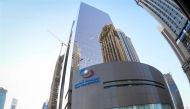
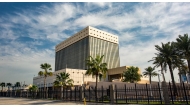
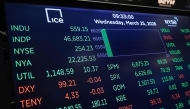
Doha, Qatar: Qatar Stock Exchange index surged at the close of this week’s trading, rising by 4.05 percent to gain 414.50 points and reach 10,641.68 points, supported by positive market sentiment following the announced two-week ceasefire agreement between the United States and Iran. The rally was driven by broad-based gains across all sectors, led by transport, which jumped 7.33 percent, followed by industry at 6.81 percent, banking and financial services at 2.98 percent, consumer goods and services at 2.87 percent, telecommunications at 2.65 percent, insurance at 2.56 percent, and real estate at 1.67 percent. In this context, financial analyst and Head of Strategy at Fortress Investment, Mostafa Abouela, said QSE index responded quickly to the ceasefire and the relative calm in the region, closing the week with gains exceeding 400 points. He noted that easing tensions boosted investor and trader appetite to capitalize on opportunities, particularly amid attractive stock price levels. The market capitalization of exchange rose from QAR 604.856 billion last week to around QR629.704bn, marking gains of approximately QR24.848bn. The analyst added that recent geopolitical pressures in the Middle East had weighed heavily on global markets, and that any signs of positive developments or de-escalation tend to have a clear impact on investment instruments and equity markets. Trading activity remained strong over the past week, with total volume exceeding 1.010 billion shares, valued at more than QR2.311bn, across 117,865 transactions spanning all sectors. Mostafa Abouela added that financial markets moved positively, with QSE index surpassing the 10,600-point level, and expectations of a new upward wave toward 11,000 points if positive developments continue and the ceasefire paves the way for a broader easing of regional tensions.

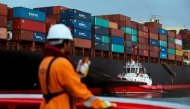
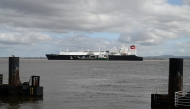
Oha, Qatar: Qatar witnessed growth in the maritime transport transactions in the first quarter (Q1) of this year as the Ministry of Transport (MoT) completed 3,074 transactions through the Maritime Transport Affairs in Q1, the Ministry posted on its X platform, yesterday. The transactions were related to main services such as issuance and accreditation of certificates of competency for safe manning, naval architect, and marine officer. The main service also includes maritime vessels (ownership transfer, renewal and registration) and foreign vessel engaged in operations in Qatari waters (data modifying and renewal). In order to enhance the efficiency of the maritime transport sector and the sustainability of supply chains, the Ministry of Transport continues to implement an integrated strategy aimed at raising the operational readiness of ports and ensuring the efficient flow of goods, thereby supporting the country’s food and economic security. Qatar’s maritime transport sector witnessed positive momentum as 430 transactions were completed from February 28 to March 28 this year through the Maritime Transport Affairs. In a seperate post the Ministry highlighted that maritime transportation continues enhancing operational efficiency and ensuring supply chains continuity through developing operational procedures and higher preparedness at ports, to support sustainability and enhance the industry’s role in the logistics ecosystem. Meanwhile the maritime transport sector witnessed a robust and impressive growth in last year as MoT completed 14,685 transactions from January to December through the Maritime Transport Affairs in 2025. Recently, the General Authority of Customs called on shipping and logistics companies to accelerate their registration in the International Road Transport Union’s TIR system, emphasising its growing importance as regional trade routes face uncertainty. The Authority continues to take all necessary regulatory measures to ensure the smooth entry of goods and commodities into the country. It is working with relevant authorities to support the stability of supply chains and facilitate customs procedures. The TIR system provides a reliable framework to maintain trade flow, particularly when maritime routes face delays or elevated costs. By simplifying customs procedures and enabling pre-cleared cargo movement, the system allows goods to move across borders with minimal physical inspections.

Singapore: Oil prices edged higher in early trading on Friday, supported by ongoing concerns over potential disruptions to energy flows through the Strait of Hormuz, despite a recently announced two-week truce between the United States and Iran aimed at paving the way for a broader de-escalation. Brent crude futures rose by 83 cents, or 0.87%, to reach $96.75 per barrel. Meanwhile, US West Texas Intermediate (WTI) crude futures gained $1.04, or 1.06%, to $98.91 per barrel. Market sentiment remained cautious as investors continued to assess geopolitical risks in the region and their potential impact on global oil supply.
Investors rush to seize opportunities as QSE index gains on regional de-escalation
Doha, Qatar: Qatar Stock Exchange index surged at the close of this week’s trading, rising by 4.05 percent to gain 414.50 points and reach 10,641.68 points, supported by positive market sentiment following the announced two-week ceasefire agreement between the United...
 Middle East conflict drags down Eurozone private sector growth
Brussels: Growth in the eurozone's private sector slowed in March 2026, as conflict in the Middle East drove up energy costs and disrupted companies' supply chains. According to a statement released Tuesday by S&P Global, the Flash Purchasing Managers' Index...
Oil prices rise on Middle East supply concerns
Singapore: Oil prices edged higher in early trading on Friday, supported by ongoing concerns over potential disruptions to energy flows through the Strait of Hormuz, despite a recently announced two-week truce between the United States and Iran aimed at paving...
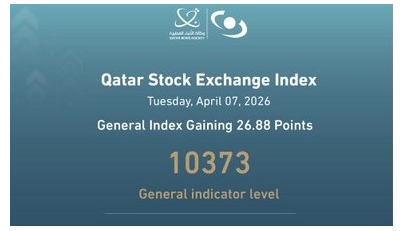 Qatar Stock Exchange Index opens higher
Doha, Qatar: The Qatar Stock Exchange (QSE) general index opened higher on Tuesday, April 7, 2026, gaining 26.88 points, or 0.26%, to reach 10,373 points, compared to the previous session's close, supported by all sectors. Market data showed gains in...