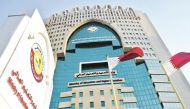
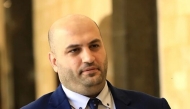
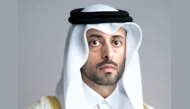
Officials and guests at the opening of the forum yesterday.
Doha, Qatar: The Public Cleanliness Department at the Ministry of Municipality organised the first National Forum on Public Cleanliness yesterday, under the slogan ‘Towards a Clean, Smart and Sustainable City,’ with broad participation from government agencies, private sector partners, universities, academic institutions, and researchers.
The forum aims to highlight the role of innovation, artificial intelligence, and modern technologies in developing the public cleanliness sector and improving the efficiency and quality of services, in line with Qatar National Vision 2030, particularly its environmental and human dimensions.
Director of the Public Cleanliness Department at the Ministry, Muqbil Madhour Al Shammari, emphasised that promoting a culture of public cleanliness and establishing the concepts of sustainability are fundamental pillars for enhancing the quality of life in Qatari cities. He noted that the forum reflects the growing interest in cleanliness and sustainability issues, and that environmental development is one of the essential pillars of comprehensive development.
Al Shammari explained that public cleanliness has become a national value and a shared societal behaviour, in which citizens, residents, and institutions across all sectors participate. He added that the Ministry seeks to transform the concept of cleanliness from a service provided to a way of life and a daily culture, thereby enhancing Qatar’s standing in regional and international indicators related to sustainability and quality of life.
Director of Security and Logistics at Qatari Diar, Eng. Abdullah Ibrahim Fakhroo, stated that public cleaning services are a pivotal element in managing modern cities, given their role in protecting public health and the environment and enhancing quality of life.
He added that Qatari Diar, through its Lusail City Operations Management, operates within an integrated operational framework for managing and maintaining public spaces and residential areas, relying on clear performance standards, qualified personnel, and modern operational solutions.
Advisor for Strategic Projects on Expatriate Labor Affairs at the Ministry of Labor, Hamad bin Abdullah Al Mulla, emphasised that adhering to safe and healthy work environment standards is fundamental to protecting workers’ health and enhancing productivity and stability in the workplace.
He explained the importance of coordinating healthy behaviours and implementing sound practices in workplaces, which contributes to reducing occupational risks and creating a healthy and sustainable work environment.
Assistant Director of the International Cooperation Department at the National Human Rights Committee (NHRC), Abdulrahman bin Sultan Al Hashemi, affirmed that the right to a safe, clean, healthy, and sustainable environment is a fundamental human right, and that urban sustainability is a cornerstone for enhancing quality of life and achieving environmental justice. Al Hashemi pointed out that developing the public cleanliness sector must be based on a human rights approach, aligning national legislation and policies with international obligations, and activating frameworks concerned with protecting workers’ rights.
Head of the Awareness and Education Section at the Public Cleaning Department, Hamad Hassan Al Tamimi unveiled the department’s smart uniform project. This project aims to integrate technology with sustainability to address climate challenges, particularly heat stress, and enhance the safety and efficiency of workers in the sector.
Al Tamimi explained that the smart uniform project is based on strategic pillars, foremost among them sustainability, by using recyclable materials, increased operational efficiency, and the achievement of medium- and long-term economic returns. It also supports the visual identity of the Ministry and the country, aligning with the overall urban landscape.
He pointed out that the proposed uniform utilises advanced nano-technology fabrics, characterised by their lightweight nature, antibacterial properties, rapid moisture absorption, and high UV protection. This contributes to lowering body temperature and improving worker comfort while performing their duties in hot weather.