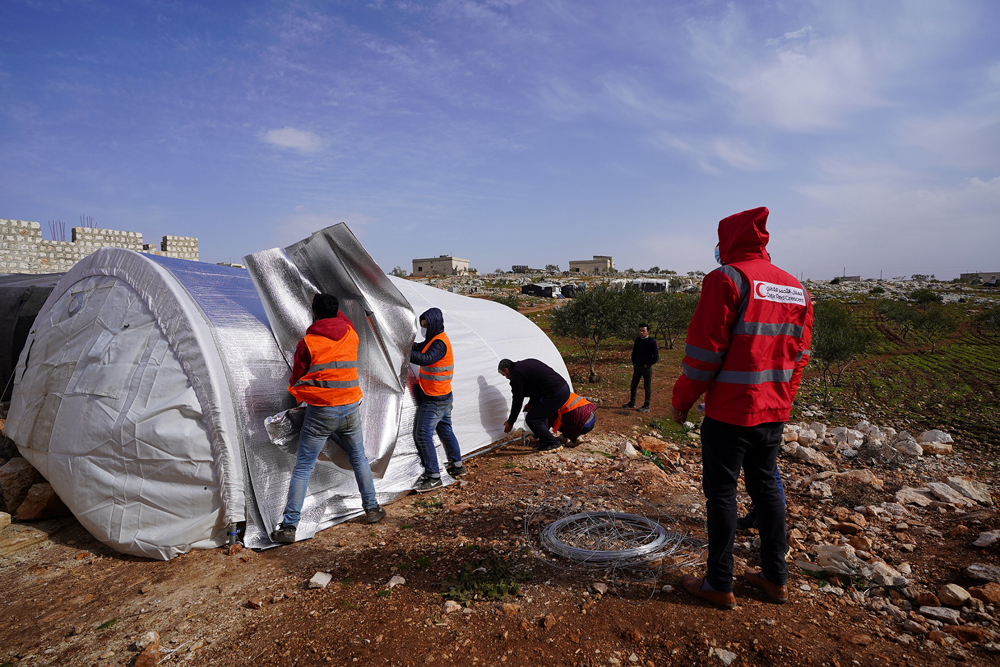
QRCS representatives setting up a tent for internally displaced people in Syria.
Doha: In response to the severe weather at the camps of internally displaced people (IDPs) in northern Syria, Qatar Red Crescent Society (QRCS) is providing a series of activities for the benefit of thousands of Syrians across shelter, healthcare, food aid, and non-food aid.
As regards winterisation activities, field personnel replaced 510 tents damaged by storms and snow, laid gravel inside the tents, and supported ground waterproofing to prevent rainwater leakage. Also, food parcels, non-food items, and COVID-19 protection kits were distributed to 510 families, or around 3,060 persons.
At the same time, other field personnel continue to provide life-saving medical services at the Zuf and Kafr Jales Health Centres, deploy a mobile medical clinic to remote and inaccessible areas, and deploy outdoor community health personnel to provide therapeutic nutrition and health education for women and children, as the most vulnerable groups at IDP camp.
On average, the two centres receive 2,300 and 3,600 visitors per month, respectively, from the neighbouring camps. They have ambulance service, GP, paediatrics, gynaecology, reproductive health, health education, laboratory tests, and free medications.
The mobile clinic moves around the remote camps where patients are unable to visit near health facilities. It provides primary healthcare services and free medications for the residents, especially children and patients with chronic diseases.
Under a project to continue to support life-saving malnutrition treatment services in northwest Syria, community health personnel visited IDP camps in the areas recently affected by snowfall and too low temperature. They conducted malnutrition screening and distributed micronutrients to prevent malnutrition among the most vulnerable groups, such as under-five children and pregnant/breastfeeding women.
Among the health education activities, QRCS organised an awareness campaign about the symptoms of hypothermia in children, how to treat and prevent it, and healthy ways to use charcoal heaters using customized informative fliers.
Patients with serious health conditions were referred to the nearest health centres. So far, approximately 30,000 persons have benefited from these activities.