Doha: Some studies suggest that Type 2 diabetes can go undiagnosed for many years, with many diabetics not being diagnosed until they experience a serious complication of the disease, such as stroke or heart attack.
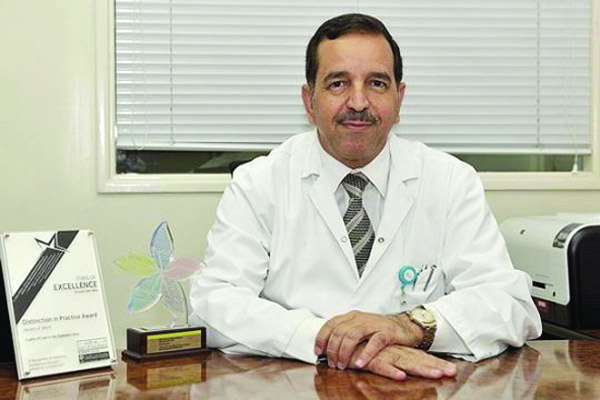
In an attempt to raise awareness of the disease, Hamad Medical Corporation’s (HMC) Senior Consultant and Head of Endocrinology and Diabetes Dr Mahmoud Zirie (pictured), is encouraging people to talk to their friends and family about diabetes and specifically its symptoms and risk factors.
While there is no single cause of Type 2 diabetes, there are well-established risk factors, including obesity, an inactive lifestyle, increased age, a family history of diabetes, polycystic ovary syndrome (PCOS) and high blood sugar levels during pregnancy, known as gestational diabetes.
With Type 2 diabetes, many people have no symptoms, or dismiss the symptoms as part of aging. Type 2 diabetes symptoms can vary from one person to another and can include excessive thirst, frequent urination, increased hunger, fatigue, blurred vision, slow healing cuts and bruises, unexplained weight loss or gain and numbness in the hands and feet.
“Being aware of diabetes symptoms is an important part for taking action. These symptoms are like an alarm clock for your health. Being aware of the symptoms is the first step in managing the disease and preventing possible complications,” said Dr. Zirie.
“An increasing number of patients diagnosed with diabetes are asymptomatic, raising the importance of knowing the risk factors of diabetes. We see many patients at the National Diabetes Centres at Hamad General Hospital and Al Wakrah Hospital who experienced no symptoms prior to their diagnosis.
“They only came to see our physicians for consultation because they developed one or more of the complications associated with diabetes,” said Dr. Zirie.
Individuals with Type 2 diabetes almost always have pre-diabetes first; this means that they have higher than normal blood glucose (sugar) levels but that those levels are not high enough to be classified as diabetes. Pre-diabetes is a good indicator to assess a person’s risk of developing the disease in the future; however, not all patients with pre-diabetes will develop type 2 diabetes.
Dr. Zirie says, “Unlike diabetes, pre-diabetes is reversible and most of the time can be managed through lifestyle modifications, including a healthy diet and regular exercise.”
HMC, in partnership with the Ministry of Public Health and the Primary Health Care Corporation, have organized a series of activities to mark World Health Day on 7 and 8 April 2016. The World Health Organization has selected raising awareness about diabetes as the theme for World Health Day 2016.
Observed each year on April 7, World Health Day was introduced by the World Health Organization (WHO) in 1995 and is one of eight official global public health campaigns marked by the organization. HMC’s World Health Day activities are designed to increase public understanding of diabetes and to empower residents to take control over their health by highlighting risk factors of the disease, raising awareness of associated signs and symptoms and providing strategies to manage and prevent Type 2 diabetes and other lifestyle-related conditions.
For more information on diabetes, including a listing of HMC’s World Health Day activities, visit diabetes.hamad.qa.The Peninsula