

By Satish Kanady
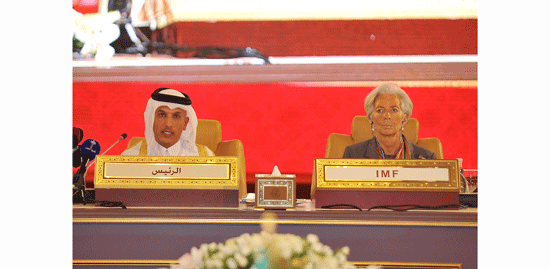
DOHA: Qatar’s proposed budget for the new fiscal year will reflect the fall in global energy prices. The budget will be realistic with a moderate deficit, Minister of Finance H E Ali Sherif Al Emadi stated yesterday. Addressing the media here, along with International Monetary Fund (IMF) Chief Christine Lagarde after a meeting with the finance ministers and central bank governors of GCC, the minister said the budget proposals will consider the realities in the global energy market.
“We have been doing very well in terms of expenditure and revenue for the past fifteen years. The country will have a very realistic approach in budget allocations for the coming fiscal….In fact, Qatar started fiscal adjustments well in advance”, he said.
Last week, addressing the Advisory Council’s 44th ordinary session, Emir H H Sheikh Tamim bin Hamad Al Thani said the new budget will take the fall in oil prices into consideration, so as to avoid a big budget deficit that may cause harm that surpasses the balance of payments to the overall economy.“This budget will focus on efficiency in government spending. It will also tend to promote growth and expansion in non-oil sectors to diversify the economy”, Emir said.
Earlier, addressing the Joint meeting of the GCC Committee on Financial and Economic Cooperation, Al Emadi said that the GCC nations need to set specific targets for realising the results of their respective financial policies. He also wanted the region to further accelerate the ongoing diversification programmes of economies and increase the efficiency of governments’ capital spending. Fiscal policies must be designed in such a way that the private sector is getting a boost.
This meeting comes at a time when the GCC economies really need a collective action to increase the cooperation with international economic and financial institutions. The partnership and engagement with IMF is key. The fund has presented a series of suggestions to tackle the challenges faced by the GCC countries in terms of falling global energy prices and tax reforms.
The Minister noted the GCC countries have taken a range of actions proactive during the last period in order to promote the diversification of their respective economies and the expansion of private sector participation in various fields.
The Peninsula







