Doha: Qatar Red Crescent Society (QRCS) has completed the preparations for two water, sanitation, and hygiene (WASH) projects to be executed in Iraqi Kurdistan over the coming few days in favor of the Syrian refugees and displaced Iraqis in Iraqi Kurdistan, with a total budget of $2,250,000, co-funded by the United Nations Children's Fund (UNICEF) and QRCS.
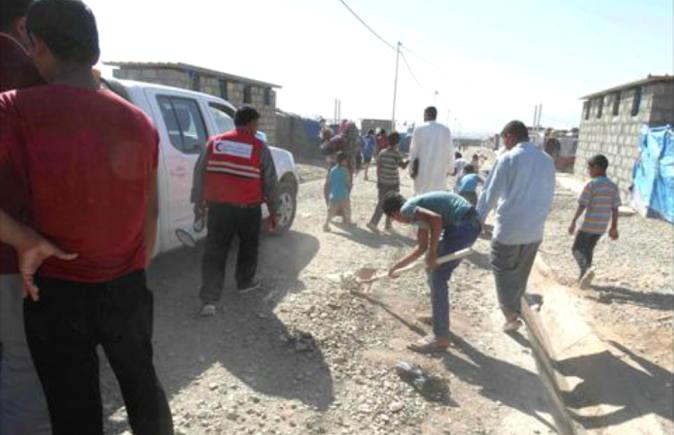
Under the first project, a sewerage network, sanitary facilities, and toilets will be established in Block B of Qushtapa Syrian Refugee Camp, Erbil. The second project involves establishing a permanent water storage and distribution system in Ashti Iraqi Refugee Camp, Sulaymaniyah, QRCS press release said.
The projects will serve 6,285 Syrians in Qushtapa, 40% of whom are children, and 7,319 Iraqis in Ashti.
QRCS and UNICEF have already completed several joint projects in favor of the Syrian refugees in Iraqi Kurdistan, totaling $2,341,417 (QR 8,520,420), to improve their conditions inside refugee camps until they become able to go back home.
These projects are under the agreement to support Syrian refugees in Kurdistan, as part of QRCS's constant efforts since the beginning of the Syrian conflict to help the affected who fled to neighboring countries (Turkey, Jordan, Lebanon, and Iraqi Kurdistan).
Among these projects are clean water delivery systems at Dar Shukran and Arbat refugee camps, with a total budget of $793,000.
In Dar Shukran camp, QRCS procured and installed 500 solar-powered water heaters to meet the everyday hot water needs of the camp's 10,000 inhabitants, providing 50 liters per family. The project also covered the camp's school, clinic, and administrative units.
In Arbat, the city of Sulaymaniyah, a pipeline network was built to provide clean drinking water for 2,560 Syrian refugees, as well as the school, clinic, and administrative units. Another water pipeline was laid in Block C to reduce the risk of waterborne diseases and ensure fair distribution of drinking water.
In Qushtapa, which is 20-km away to the west of the region's capital, QRCS's office built 728 sanitary facilities, installing 24 20-m3 water tanks, and laying a 2,180-m polyethylene pipeline for the Syrian refugees in Block C.
It is a safe, environment-friendly sewerage network that covers the administrative facilities, schools, and other refugee service centers of the camp. The cost was $1,288,758, 60% of which was paid by UNICEF and 30% by QRC, which was also responsible for the execution.
Under QRCS's Warm Winter 2014-15 campaign in Iraqi Kurdistan, which targeted the Iraqi IDPs in Erbil, QRCS staff distributed $219,178 worth of winter aid to 5,088 most-vulnerable families (25,440 people) with widows, children, elderlies, and disabilities. Each family received three blankets.
QNA