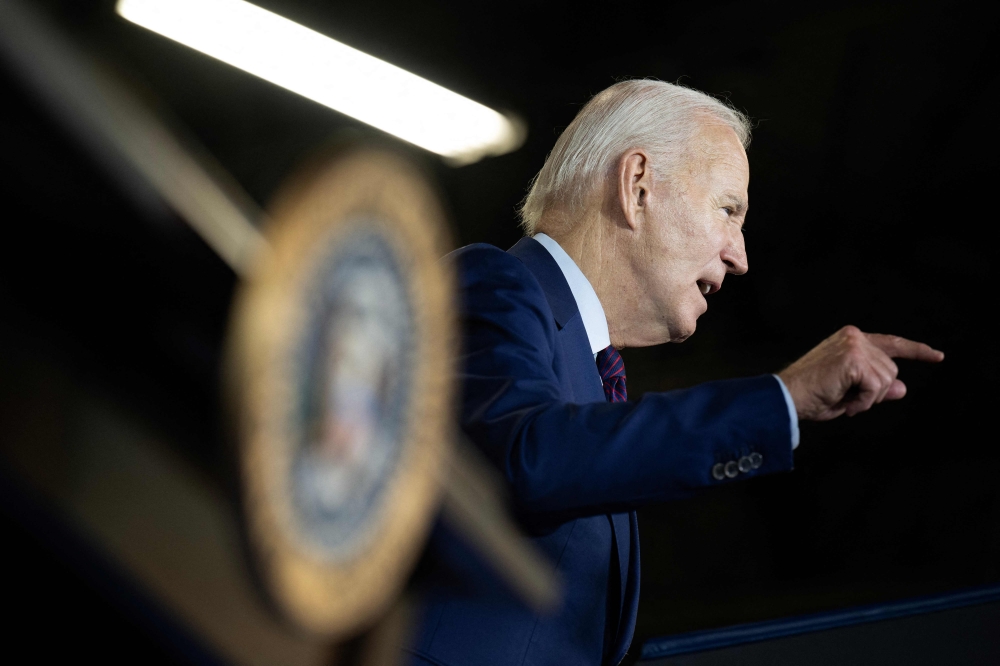
File photo
The economy is getting a boost from Bidenomics and a bulging federal budget deficit, simultaneously fueling hopes the US will avoid a recession while fanning fears it will be stuck with too much debt and too-high inflation.
A trio of legislation championed by President Joe Biden - stepped-up infrastructure spending, increased investment in a green economy and a build-up in semiconductor manufacturing - helped galvanize demand in the second quarter and is likely to have a bigger impact going forward.
Economic growth has also been unexpectedly goosed by a widening of the federal government’s budget deficit, driven in part by outsized Social Security payments and a delay in income tax payments by California businesses and residents.
A key question is whether the more-than $1 trillion worth of support from Bidenomics, which the president aims to make a pillar of his re-election campaign, is well-timed. The debate is whether it’s paving the way for a soft landing of the economy, or laying the groundwork for a renewed rise in inflation.
Advocates of each scenario found support for their views in the latest employment report. Payroll growth slowed but stayed sturdy last month, buttressing hopes the US can avoid a recession. But wage gains remained elevated, feeding inflation fears.
Moody’s Analytics chief economist Mark Zandi is among those seeing Bidenomics as a plus, arguing it will help offset the lagged economic impact of aggressive credit tightening by the Federal Reserve and allow the US to skirt a recession.
"The timing is very propitious,” he said. He calculates that Bidenomics will make up about 0.4 percentage point of the relatively meager 1% economic growth rate he’s penciled in over the coming year.
Other economists worry that the Biden stimulus is working at cross purposes to the Fed’s efforts to slow growth and reduce inflation to its 2% goal - potentially setting the stage for even more rate hikes next year.
‘Growing Risk’
"There is a growing risk that strong growth now fuels inflation later,” said Neil Dutta, head of economics for Renaissance Macro Research, who argues a resilient economy and durable labor market have already shrugged off the Fed’s rapid-fire rate increases.