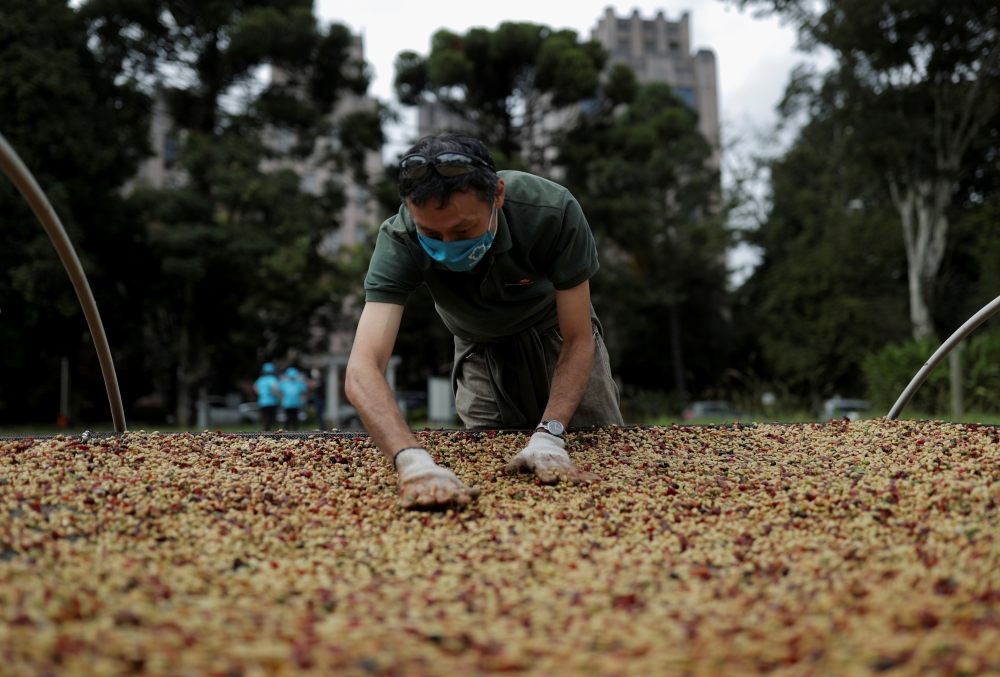
File photo: A man spreads coffee grains for drying at the Biological Institute plantation in Sao Paulo, Brazil May 8, 2021. Picture taken May 8, 2021. REUTERS/Amanda Perobelli
Brazilian exporters are rushing to ship coffee to Europe as a global shortage of the type of beans used in instant drinks sent prices soaring in London.
Traders have started to ship cargoes of Brazilian robusta beans to European warehouses, according to people familiar with the deals, who asked not to be named because the information is private. That will allow them to deliver the coffee to buyers of futures in London.
Global shortages have sent robusta prices soaring to near the highest level in 15 years, with the premium September futures command over November surging to a record.
Stockpiles that back exchange contracts have plummeted more than 30% since July as traders resort to ICE Futures Europe to meet demand.
"Demand has been gigantic,” said Tiago Aouila, a manager at Tristao Cia de Comercio Exterior, a trading company based in the heart of top robusta producing state of Espirito Santo.
Brazil exported nearly 475,000 bags of robusta coffee in July, more than double the amount sent in the previous month, according to preliminary data from Cecafe.
While the exporters’ group has yet to publish where the beans are being shipped to, Carlos Santana Jr., a Brazil-based commercial director at trader Ecom Group, says some of the coffee already loaded on to ships in July will be delivered to the London exchange.
Shipments should keep rising through August, he added.
Sourcing beans via the London exchange is currently cheaper than in the physical market. Coffee from top robusta producer Vietnam was last week at a premium of $460 a ton over the futures market, while beans from No. 3 Indonesia were at a premium of $585 a ton, according to a report by trader Volcafe Ltd. Brazil is the world’s second-largest producer of robusta.
While global supplies have tightened, consumption has boomed. Europeans are increasingly drinking more robusta, a variety that costs less than the premium arabica coffee.
Typically known for its bitter taste, robusta is gaining ground as inflation reduced consumers’ purchasing power. Data compiled by Rabobank shows robusta is already making up a 36% share of coffee imports into UK and the European Union, up from 31% a year earlier.
Rabobank analyst Guilherme Morya expects Brazil to export nearly 3 million bags of robusta coffee in 2023, almost double the amount from last year.
"Brazil will give its contribution to supply the world,” he said.