DOHA: Qatar Red Crescent Society (QRCS) organised two courses to build the capacity of relief workers involved in Syria, in the field of child malnutrition treatment and human rights in the International Humanitarian Law and Shariah.
In coordination with the food cluster in northern Syria, led by the Office for the Coordination of Humanitarian Affairs (OCHA), QRCS mission in Turkey held a course for trainers on Community-based Management of Acute Malnutrition (CMAM).
It was attended by 30 coordinators, project managers, and medics from 17 humanitarian agencies in northern Syria. They were trained in methods and techniques of treating children with acute malnutrition, and how to make an effective medical intervention on the ground.
The five-day course was held at the headquarters of Awraq Community Development Organisation, Gaziantep, with funding from QRCS. It was held in Arabic and English and certificates and material were shared with participants.
The course aimed to prepare CMAM trainers, which is crucial to treating child malnutrition at QRCS centres. The trainers will later share their skills and knowledge with field practitioners, including types, factors, clinical symptoms and classification of acute malnutrition.
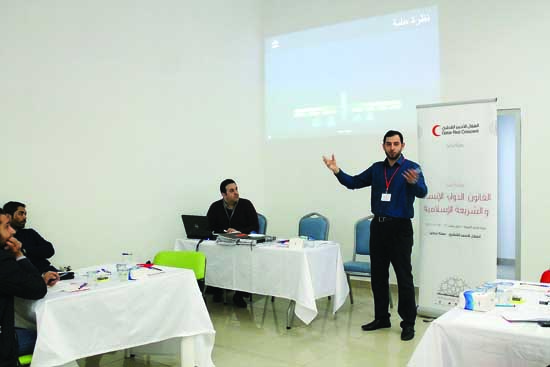
In parallel, the other course was organised in coordination with Afaq Academy, and included nine lectures on the International Humanitarian Law, the International Human Rights Law, and their link with the teachings of Shariah. The two-day course was attended by 20 trainees from QRCS and Syrian NGOs working in Gaziantep.
The participants received basic information about the International Humanitarian Law, the International Human Rights Law, and the Islamic perspective on both. The lectures were delivered by Dr Saad Rostom, Manager of the International Humanitarian Law and Islamic Shariah Promotion Project, Dr Osama Al Shorbagi, and Malik Nasser from Afaq Academy.
Certificates of participation and course material were shared with the attendees. The courses were part of QRCS efforts to support the Syrian people in their protracted calamity, whether in terms of relief, development or humanitarian diplomacy and advocacy.
The Peninsula